


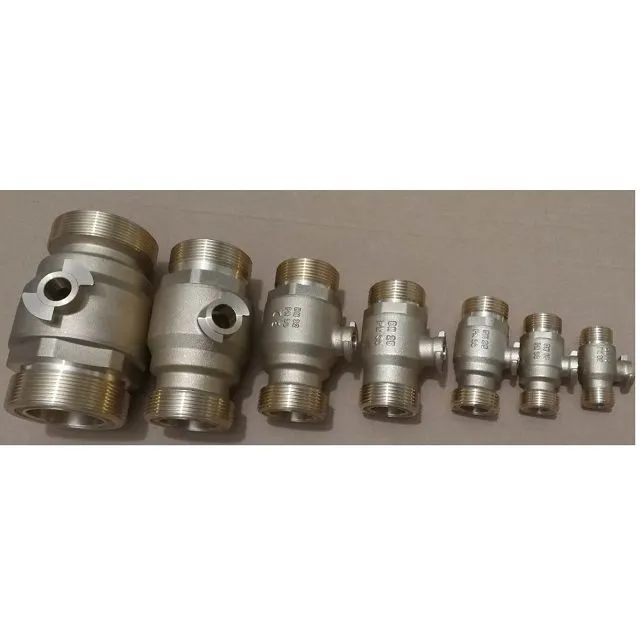


Description
Technical Parameters
Production Range | The world of machining is a vast and complex one, with a variety of processes that fall under its umbrella. Some of the most common machining techniques include CNC machining, lathing, milling, turning, drilling, tapping, and broaching. We offer a range of casting methods to suit the unique needs of our customers, including Investment Casting, Precision Casting, Silica Sol Lost Wax Casting, Forging, Stamping, and Punching. Our team of experts can help you determine which type of casting is best suited to your project. With our state-of-the-art facilities and advanced techniques, we can produce high-quality castings that meet even the most demanding specifications. Whether you need parts for automotive, aerospace, medical, or other applications, we have the expertise and resources to deliver the results you need. Contact us today to learn more about our casting services and how we can help you achieve your goals. |
Material | Copper alloy Various types of brass alloys are commonly used in various industries. These include HPb59-1, CuZn39Pb1/2/3, CuZn40, C36000, C37710, C67400, and many others. Each alloy possesses unique properties, making them suitable for specific applications. The HPb59-1 alloy, for instance, is widely used in the manufacture of valves, connectors, and other plumbing components. On the other hand, CuZn39Pb1/2/3 alloys are ideal for manufacturing precision parts due to their excellent machinability and corrosion resistance properties. C36000 and C37710 brass alloys are used in the production of gears, valves, and fittings, among other applications. C67400 brass alloy is commonly used for marine applications due to its excellent corrosion resistance properties. In conclusion, brass alloys are essential materials in various industries, and each has unique properties that make it suitable for specific uses. Aluminum bronze is a type of bronze alloy that is composed of various materials. Some examples of aluminum bronze include QAl11-6-6, CuAl10Fe2/3, CuAl10Ni5Fe5, C65500, C95600, and C87500. These materials are similar in composition and properties, making them ideal for various industrial applications. Some variants of tin bronze include CuPb5Sn5Zn5, C83600, C84400, and C86500. These alloys have varying ratios of copper, lead, tin, and zinc, which determine their mechanical properties and suitability for different applications. Tin bronze is known for its excellent machinability, corrosion resistance, and low friction, which make it a popular choice for bearings, gears, valves, and other parts that require high wear resistance and tight tolerances. In addition, tin bronze can be easily cast, welded, soldered, and plated, making it a versatile and cost-effective material for various industrial and artistic purposes. There are several types of stainless steel that are commonly used in various applications. These include SUS304, SUS316, ZG0Cr18Ni12Mo2Ti, and SCS14, among others. Aluminium alloy: 6061, 2024, etc. |
Dimension | Our professional expertise covers a wide dimension range, from as small as 1mm to as large as 300mm, or equivalently, from 0.03inch to 12inch. With such broad capabilities, we can accommodate a variety of project requirements and deliver precision results that meet your specifications. Let us work together to achieve your desired outcomes. |
Tolerance | 0.001mm-0.01mm-0.1mm |
Weight | Weight is an important factor in the professional world, especially in the range of 0.001kg to 15kg. It is crucial to be knowledgeable and skilled in handling objects of various weights within this range. Expertise in this weight range is highly valued and sought after. Therefore, professionals who possess extensive knowledge and experience with items weighing from 0.001kg to 15kg are considered the most skilled and competent in their field. Their expertise enables them to handle and manipulate objects effectively, making them highly sought after in numerous industries. Being proficient in this weight range demonstrates a level of precision and versatility that is essential for many professional tasks. |
Finish | Annealing, sand blasting, shot blasting, polishing, heat treatment, zinc plating and anodizing are all different techniques used in metal processing. Shot blasting and sand blasting both involve the blasting of abrasives onto a surface to clean and prepare it for further treatments. Heat treatment refers to the process of heating and cooling metal to change its physical properties, while annealing involves heating metal to a specific temperature and allowing it to cool slowly to improve its ductility and toughness. Tempering is a similar process to annealing, but involves reheating metal to a lower temperature to increase its hardness. Polishing is a technique used to improve the texture and appearance of metal surfaces, while anodizing involves adding a protective coating to metal by immersing it in an electrolyte solution. Finally, zinc plating involves the coating of metal with a thin layer of zinc to protect it from corrosion. Overall, these techniques are essential in the processing of metals and often work together to create a finished product. |
MOQ | For casting parts: 300kgs For Machining: 50pcs |
OEM Material We manufacturer:
Process Techonology | Material |
Investment casting | ASTMA148class80-40, ASTMA148Class80-50 A572GR60, AISI316 stainless steel ST52, S355, GS-52.3, ASTMA48Class30B CK45, 1.7218-25CrMo4 |
Sand casting | We have a variety of materials available for your specific needs, including GGG50, GGG30, ASTMA48 class25B, 42CrMo4, C22 ductile iron 65-45-12, AlCuMgpbF34, EN-JIS-500-7 EN1563, EN10293-GE300, HT200, and DIN17205-GS-25CrMo4. Each material has its unique properties that make it suitable for different applications. |
Die casting | C1040, A356, A380,AISI12 |
Stamping Parts | Steel, alloy, Aluminum or as above |
Forging | Copper, aluminum, zinc, brass, steel, alloy, or other are some of the materials commonly used in various industries. Each material has its own unique properties and advantages. |
CNC Machining | There are several types of metals that are commonly used in various industries. These include steel, alloy, aluminum, zinc, copper, and brass, among others. Each of these metals has unique properties that make them suitable for different applications. |
Hot Tags: copper forgings, China copper forgings manufacturers, suppliers, factory
Previous
Carbon Steel ForgingsSend Inquiry


